
Get Pricing
Scrap metal pricing: how we price your material
Minor metal scrap has no fixed price list. Every lot is priced on what's actually in it. Here's what affects the number, how our terms work, and how to get a personalised quote.
Prefer chat?
Turbine Parts for Mutilation
Tungsten Recycling
Germanium Recycling
Gallium Recycling
Indium Recycling
Hafnium Recycling
Rhenium Recycling
Tantalum Recycling
Niobium Recycling
Tin Recycling
Molybdenum Recycling
Vanadium Recycling
Zirconium Recycling
Tungsten Carbide Scrap
Nickel Alloys
Cobalt Alloys
Titanium Alloys
High Speed Steel
Jet Engine & Turbine Blade Scrap
Rare Earth & Magnet Scrap
Battery Black Mass
Tungsten Catalyst
Molybdenum Catalyst
Copper Catalyst
Vanadium Catalyst
Mixed-Metal Catalyst
Precious Metal (PGM) Catalyst
Gold (Au)
Silver (Ag)
Platinum (Pt)
Palladium (Pd)
Rhodium (Rh)
Iridium (Ir)
Ruthenium (Ru)
Metal-Bearing Sludges
Mixed Metal Residues
Filter Cakes
Sweeps
Dusts
Fines
Slags
Tantalum & Niobium (ores)
Tungsten (ores)
Tin (ores)
Titanium (ores)
Rare Earth (ores)
Why there is no price list
Same metal, very different value
Germanium alone comes in more than a hundred forms, from 99.99% pure solids to 5% powders contaminated with arsenic. A fixed price per kg would be wrong for almost every lot, so we don’t publish one.
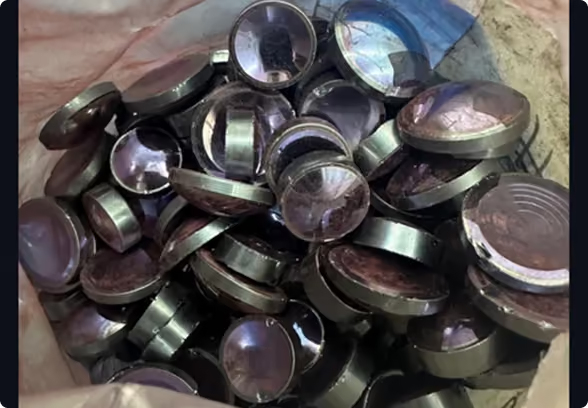
Highest value
Clean Germanium Lenses
High purity, uncoated solids
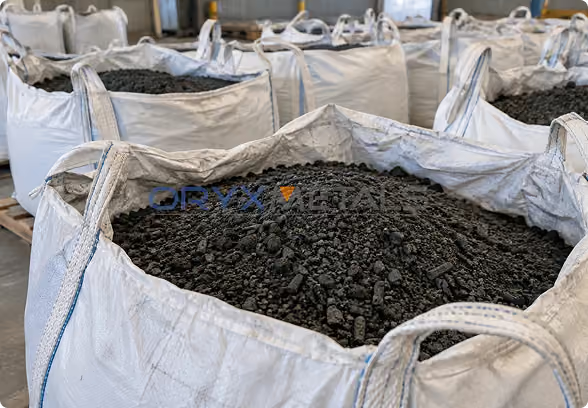
Up to 50x less
Contaminated Germanium Powder
~10% Germanium, arsenic present
What affects the price
Six things that decide what your scrap is worth
Metal content
The percentage of germanium, tantalum, cobalt or other payable metal, from your XRF or lab assay. This is the biggest driver.
Form
Solids, turnings, powders, sludges, sweeps or whole parts. Clean solids are worth more than fines of the same metal.
Contamination and moisture
Arsenic, copper, oils, coatings or water all add processing cost and lower what the material is worth.
Market prices
Minor metal prices move with supply, demand and export controls. Offers reflect the market on the day.
Quantity and consistency
How much you have, and whether the whole lot matches the sample you analysed.
Location and logistics
Where the material sits, how it's packed, and the cost of shipping and customs to the right processor.
What to send us
What we need for an accurate price
Photos
Close-ups and a wide shot of the whole lot or XRF readout or lab assay.
Form
Solids, turnings, powder, sludge, parts.
Quantity
A rough number is enough to start.
Location
Country and city where the material sits.
FAQs
Scrap metal pricing: from “what’s it worth?” to getting paid
How much is my scrap metal worth?
It depends on what’s in it. For minor metals and high temperature alloys, scrap metal pricing comes down to the metal content, the form (solids, turnings, powders, sludges), contamination and moisture, the market price on the day, and where the material is located. Send us a photo and an analysis, and we’ll reach you out, usually within 24 hours.
Why doesn’t Oryx Metals publish a scrap metal price list?
Because a fixed price would be wrong for almost every lot. The same metal can come as clean solids or as contaminated powder, and the value per kg between the two can differ many times over. A published price would either overpay for low-grade material or underpay for high-grade material, so we price every lot on its own analysis.
What if your assay doesn’t match my XRF reading?
Handheld XRF readings are a good starting point but can differ from a full lab assay, especially for powders, coatings and mixed material. Your first price is indicative and based on what you send us. The final price is set on the assay of a representative sample. If results differ, [an umpire assay by an independent lab can settle it], so neither side has to take the other’s word.
How do I know I’m getting a fair price from Oryx Metals?
We show our working. Every Oryx offer is in writing and tied to the analysis of your material, so you can see what the price is based on. Oryx Metals has specialised in minor metals and high temperature alloys for over 20 years, and sells to the specialist refiners that pay most for complex material. That’s how we can offer competitive prices on lots general scrap buyers would undervalue or turn down.
Is the indicative price the final price?
Not always. The indicative price is based on your photos and analysis. The final written offer follows sampling and assay where needed and confirms price, payment terms and delivery basis before anything ships. If the assay confirms what you sent us, the price holds.
How and when do I get paid, and who covers shipping?
Payment is made by wire transfer on the terms agreed in your written offer, [prepayment, on delivery or after assay, depending on the lot]. Oryx arranges logistics, import, export and customs clearance. Who pays freight depends on the delivery basis agreed in the offer, [for example EXW, FOB or CIF].