Jeremy Tew

Spent Copper Catalyst Recycling: A 100-Ton Recovery Project in Colorado
Spent catalysts and absorbent media can contain significant concentrations of valuable metals long after they have reached the end of their useful service life.
Copper-based catalysts and purification media are a good example. These materials are used in a variety of industrial gas treatment and chemical processes, including applications involving the removal of hydrogen sulfide (H₂S) and other sulfur compounds. Once exhausted, the material may no longer be suitable for its original purpose, but it can still contain substantial quantities of recoverable copper.
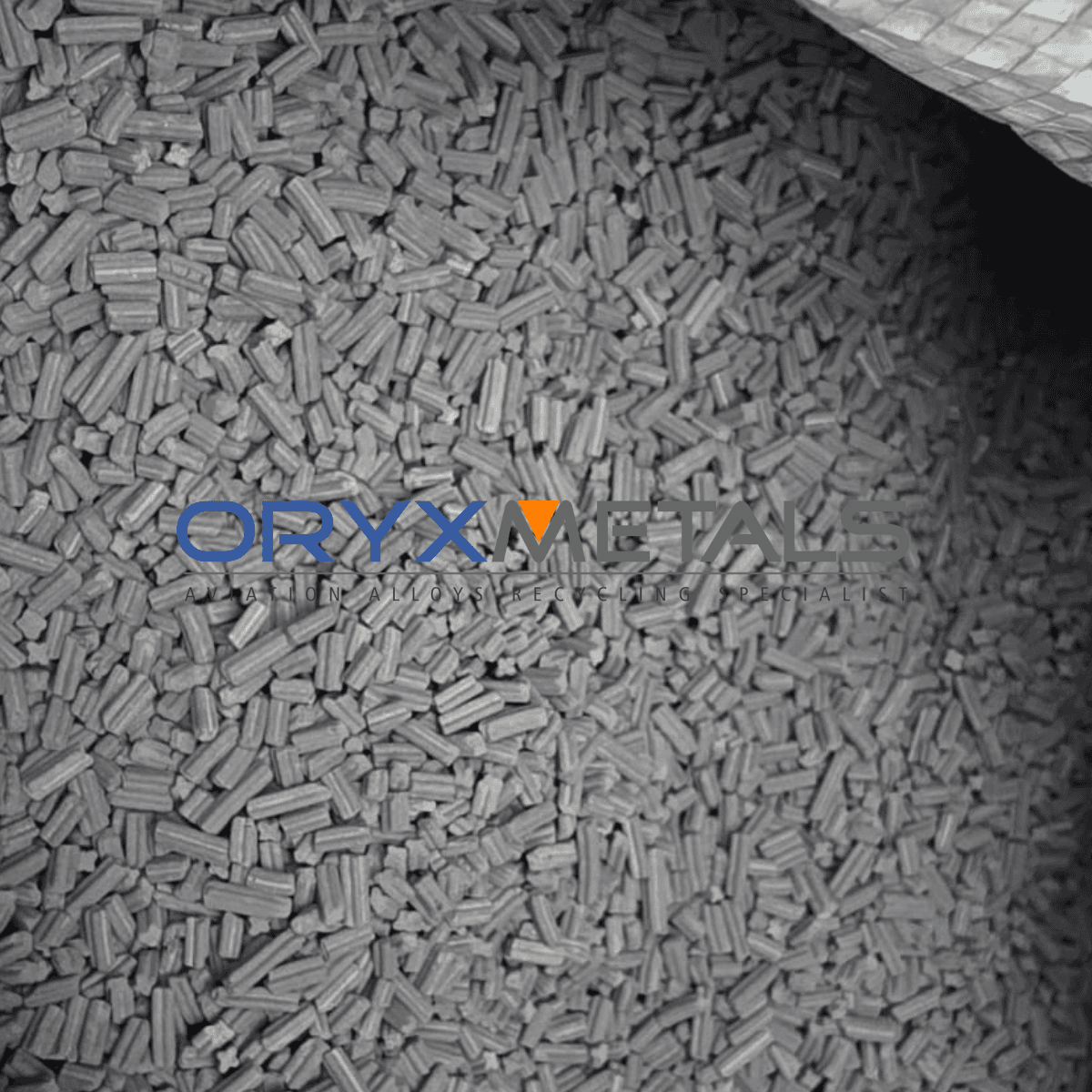
Oryx Metals recently completed the purchase and load-out of approximately 100 metric tons of spent copper-bearing material in Colorado, USA, containing an estimated 32 metric tons of copper.
The project involved independent sampling and analysis by AHK, material preparation and packaging, and coordination of the material for downstream recycling.
It provides a good example of how an unusual industrial by-product can be evaluated and transformed from a difficult-to-handle material into a valuable secondary source of metal.
What Is Spent Copper Catalyst?
Copper compounds are used in catalysts, adsorbents and purification media across a range of industrial processes.
Applications can include:
Hydrogen sulfide (H₂S) removal
Sulfur compound removal
Natural gas treatment
Biogas purification
Industrial gas purification
Petrochemical processing
Chemical manufacturing
Hydrogen and process-gas purification
Depending on the application and manufacturer, the original media may contain copper oxide, copper carbonate or other copper compounds supported by or blended with additional inorganic materials.
During operation, the active material reacts with contaminants in the process stream. Eventually, its effectiveness declines and the media must be replaced.
However, the spent material can still contain significant copper value.
Oryx Metals' Colorado Copper Catalyst Project
The material involved in our recent Colorado project represented approximately 100 metric tons of spent copper-bearing media.
Based on the available analysis, the overall material contained approximately 32 metric tons of copper.
This was not conventional copper scrap. The copper was contained within a processed industrial material together with other constituents from the original media and its use.
That distinction is important because spent catalyst cannot simply be valued and handled in the same way as copper wire, busbar or other metallic copper scrap.
The first step is understanding exactly what the material contains.
For this project, Oryx Metals appointed AHK as the independent inspectorate to oversee representative sampling and analysis of the material. Establishing reliable chemistry allowed the contained copper value to be confirmed and the appropriate downstream recycling route to be evaluated.
Following preparation, the material was packed into supersacks on pallets for handling and shipment.
Why Independent Sampling and Analysis Matters
Representative sampling is one of the most important parts of purchasing large quantities of spent catalyst, residues and other secondary raw materials.
A 100-ton industrial stockpile cannot necessarily be accurately represented by a single grab sample.
Composition can vary between containers, catalyst beds, production periods or different sections of the stockpile. Particle segregation can also occur during handling and storage.
For the Colorado material, using AHK for independent sampling and analysis provided an objective basis for evaluating the shipment.
Depending on the material and transaction, an independent inspectorate can oversee:
Weight determination
Representative sampling
Sample preparation
Moisture determination
Sample sealing
Laboratory analysis
An agreed third-party sampling and analytical procedure gives both buyer and seller greater confidence that the commercial settlement reflects the material actually being traded.
Understanding the Complete Chemistry
Copper content is obviously important, but it is only part of the evaluation.
Spent catalysts can contain a wide range of other constituents depending on their original formulation and the industrial environment in which they operated.
These can include:
Sulfur
Carbon
Moisture
Aluminum
Silicon
Iron
Zinc
Nickel
Chlorides
Carrier materials
Other process contaminants
For this reason, Oryx Metals generally prefers to evaluate a broader chemical analysis rather than only the percentage of copper.
This is particularly important when dealing with spent catalyst because two materials containing exactly the same copper percentage can have substantially different processing economics.
One may be readily acceptable to a particular processor, while another may contain impurities that require a completely different metallurgical route.
Why the Original Industrial Process Matters
When evaluating spent catalyst, we also want to understand where the material came from and what it was used for.
The original application can provide important information about both the composition of the media and the contaminants it may have accumulated during service.
Useful information can include:
Catalyst or media manufacturer
Product name or grade
Original technical data sheet
Safety Data Sheet (SDS)
Industrial process
Material being treated
Gas or liquid stream composition
Approximate service life
Reason for replacement
Previous recycling or disposal method
For H₂S-removal media, for example, the sulfur content of the spent material may be particularly relevant when evaluating downstream processing.
Even when complete historical information is unavailable, representative sampling and laboratory analysis can often provide enough information to determine whether a viable recycling route exists.
The Contained Copper Value
The economics of spent copper catalyst begin with the amount of copper actually contained in the material.
For example, one metric ton of material containing 32% Cu contains approximately:
1,000 kg × 32% = 320 kg of contained copper
At 100 metric tons, that equates to approximately:
32,000 kg of contained copper
This demonstrates why apparently unusual industrial residues can have significant value.
However, contained metal value is not the same as the commercial purchase value of the material.
A processor cannot necessarily recover 100% of the contained copper, and the material must still be handled, transported and processed.
How Spent Copper Catalyst Is Valued
Unlike exchange-traded copper or standardized grades of copper scrap, there is no universal market price for spent copper catalyst.
Each material must be evaluated individually.
A simplified starting point is:
Dry weight × copper content × applicable copper price
From that theoretical contained-metal value, the economics may need to account for:
Metallurgical recovery
Treatment charges
Refining charges
Impurity penalties
Moisture
Sampling and analysis
Preparation and packaging
Transportation
Handling
Regulatory and compliance requirements
The resulting economics determine the amount that can be paid for the material.
Where additional commercially recoverable metals are present, those may also contribute to the overall value.
Why 30% Copper Does Not Always Equal 30% Copper
Consider two spent industrial materials that both assay at 30% Cu.
The first contains copper together with relatively straightforward oxides and carrier materials.
The second contains the same copper concentration but also has elevated concentrations of problematic elements.
On paper, both contain exactly the same amount of copper.
In practice, their commercial values may be very different.
The first material might be compatible with several processors. The second might require a specialized facility capable of handling its particular chemistry.
This principle applies not only to copper catalysts but also to spent catalysts, baghouse dust, filter cakes, plating sludge, concentrates and other complex metal-bearing residues.
The headline metal percentage is only the beginning of the evaluation.
Preparing Spent Catalyst for Shipment
Physical preparation is another important part of handling spent industrial materials.
Depending on the condition of the material, preparation can include:
Screening and Sieving
Oversized foreign material or unwanted debris may need to be removed before sampling or shipment.
Homogenization
Mixing or otherwise preparing the material can improve consistency and help produce more representative samples.
Sampling
Representative samples are collected for independent analysis.
Moisture Determination
For materials containing significant moisture, settlement may be based on dry weight rather than gross shipment weight.
Packaging
Spent catalyst may be packaged into suitable drums, supersacks or other containers depending on its physical properties and transportation requirements.
For the Colorado project, the prepared material was packaged into supersacks secured on pallets, allowing it to be handled efficiently during the load-out and subsequent transportation.
From Industrial By-Product to Secondary Raw Material
The Colorado project demonstrates an important aspect of modern metals recycling:
A material does not need to look like metal to contain substantial metal value.
Spent catalysts, sludges, filter cakes, baghouse dusts and other industrial residues can contain significant quantities of metals that would otherwise need to be produced from primary resources.
The challenge is determining:
What metals are present?
In what concentrations?
What else is present?
How representative is the analysis?
Which metallurgical process can recover the metals?
What are the processing and logistics costs?
Once those questions are answered, what initially appears to be a difficult industrial residue may become a viable secondary raw material.
More Than Spent Copper Catalyst
Oryx Metals specializes in evaluating metal-bearing materials that do not always fit conventional scrap specifications.
In addition to spent copper catalysts, we evaluate materials including:
Spent nickel catalysts
Spent molybdenum catalysts
Spent tungsten catalysts
Spent vanadium catalysts
Ni-Mo catalysts
Ni-W catalysts
Co-Mo catalysts
Ni-V catalysts
Mo-W materials
Mo-W-V materials
Copper-bearing filter cake
Plating sludge
Metal-bearing wastewater sludge
Baghouse dust
Furnace dust
Ashes
Concentrates
Process residues
Industrial by-products
Mixed-metal secondary materials
We are particularly interested in materials containing combinations of Cu, Ni, Co, Mo, W, V, Sn, Zn, Pb and other valuable metals.
Complex Materials Require the Right Processing Route
Many industrial generators encounter materials that conventional scrap dealers cannot properly value.
In other cases, a refinery may reject a material because one particular impurity exceeds its normal specification.
That does not necessarily mean the material has no recycling value.
Different processors have different capabilities.
A material that is problematic for one facility may be an appropriate feedstock for another facility designed to handle that particular chemistry.
This is where Oryx Metals' international network becomes particularly valuable.
Rather than limiting an evaluation to a single processing facility, we work to identify appropriate outlets based on the complete composition and physical characteristics of the material.
Selling Spent Copper Catalyst to Oryx Metals
Oryx Metals purchases and evaluates spent copper catalysts, copper-bearing purification media and other complex copper-bearing industrial materials.
We work with:
Industrial manufacturers
Chemical companies
Oil and gas operations
Gas-treatment facilities
Refineries
Catalyst users
Environmental and industrial recyclers
Metal processors
Traders
We evaluate both one-time stockpiles and recurring material streams.
For an initial evaluation, the most useful information is:
Material description
Available quantity
Copper assay
Complete chemical analysis, if available
Moisture content
Material location
Photographs
Packaging
SDS
Original catalyst or media information, if available
Description of the industrial process that generated the material
If complete analytical information is not available, send us the information you have. Sampling and analysis can then be discussed where appropriate.
Spent Copper Catalyst Recycling with Oryx Metals
Our recent approximately 100-metric-ton Colorado project demonstrates the type of material Oryx Metals is equipped to evaluate and handle.
From independent sampling and analysis by AHK, through material preparation, packaging and load-out, the objective was to establish a transparent basis for purchasing the material and ultimately recovering its contained copper.
If your company generates spent copper catalyst or another difficult metal-bearing industrial residue, we would be interested in reviewing it.
Oryx Metals purchases complex metal-bearing secondary materials worldwide.
Email: sales@oryx-metals.com
Website: oryx-metals.com
We Purchase a Wide Range of Materials

Recycling More than 12 metals!