Jeremy Tew
Industrial Metal Waste & Residue Recycling | Sludge, Filter Cake, Dust & Spent Catalysts
Complex Metal Residues & Industrial Waste Recycling: Recovering Value from Difficult-to-Process Materials
Modern manufacturing, metal processing, mining, refining, plating and chemical production generate enormous quantities of metal-bearing residues and by-products every year.
Many of these materials contain significant concentrations of valuable metals. However, unlike clean metal scrap, they may also contain multiple metals, high moisture, oxides, salts, carbon, oils and other impurities that make them difficult to process through conventional recycling channels.
Materials such as spent catalysts, baghouse dust, filter cakes, plating sludge, concentrates, residues, ashes, slimes, slags and other industrial by-products can therefore present manufacturers with a difficult question:
Is this material a waste requiring disposal, or is it a valuable secondary raw material that can be recycled?
At Oryx Metals, we specialize in evaluating and purchasing complex metal-bearing materials from industrial generators, recyclers, processors, mines and traders worldwide.
Our focus is particularly on materials containing combinations of valuable base, minor and critical metals—including copper, nickel, cobalt, molybdenum, tungsten, vanadium, tantalum, niobium, tin, zinc, lead, indium, gallium, germanium and other recoverable metals.
Even when a material contains several metals or significant impurities, there may be a viable recycling route.
What Are Complex Metal-Bearing Residues?
Complex metal residues are secondary materials generated during manufacturing, mining, refining, chemical processing, pollution-control systems and other industrial operations.
Unlike conventional scrap metal, these materials are often heterogeneous and may contain valuable metals in combination with oxides, salts, carbon, ceramics, moisture and other compounds.
They can occur as:
Powders
Dusts
Ashes
Sludges
Filter cakes
Slimes
Concentrates
Residues
Catalyst
Scale
Dross
Matte
Slag
Tailings
Grindings
Sweeps
Turnings
Granules
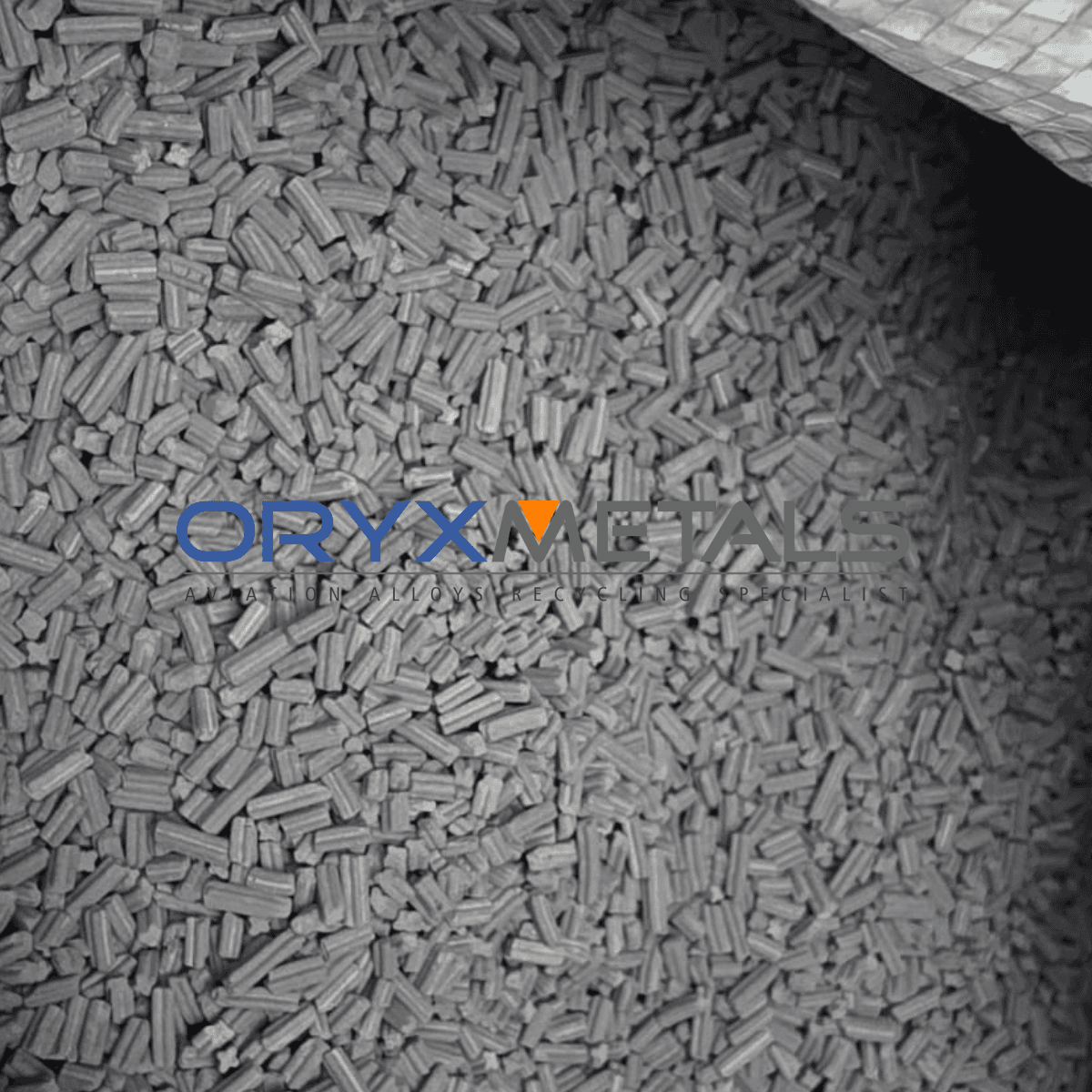
Briquettes
Lumps
Process by-products
The physical form is often less important than the recoverable metal content, chemical composition, impurities and available processing route.
A material that has little value to one refinery may be an attractive feedstock for another facility specifically designed around that chemistry.
That is why complex residues require a different approach from conventional scrap trading.
Materials We Evaluate
Oryx Metals is interested in a broad range of metal-bearing industrial materials.
Spent Catalysts
Industrial catalysts are used extensively in petroleum refining, chemical manufacturing, hydrogenation, hydroprocessing and numerous other industrial processes.
After their catalytic performance declines, the resulting spent catalyst may still contain economically significant quantities of metals such as:
Molybdenum (Mo)
Tungsten (W)
Vanadium (V)
Nickel (Ni)
Cobalt (Co)
Copper (Cu)
Platinum (Pt)
Palladium (Pd)
Other specialty metals
The challenge is that spent catalysts can contain combinations of metals together with alumina, silica, sulfur, carbon, hydrocarbons and other process contaminants.
Oryx Metals evaluates both single-metal and polymetallic spent catalyst streams.
Examples include Ni-Mo, Ni-W, Co-Mo, Mo-W, Ni-V, Mo-V, W-V and other mixed-metal catalyst systems.
Baghouse Dust and Industrial Dust
Baghouse systems capture fine particulate matter from furnaces, smelters, foundries, thermal processing operations and other industrial facilities.
The resulting dust can contain surprisingly high concentrations of valuable metals.
Depending on the originating process, baghouse dust may contain combinations of:
Zinc
Lead
Copper
Nickel
Cobalt
Tin
Molybdenum
Tungsten
Vanadium
Chromium
Other metals
The difficulty is often not identifying the valuable metals—it is finding a processing route capable of managing the complete chemistry.
Fine particle size, variable composition and elevated concentrations of elements such as lead, arsenic, cadmium, chlorine or fluorine can make some dusts unsuitable for conventional smelters.
We evaluate these materials individually based on their complete chemical analysis.
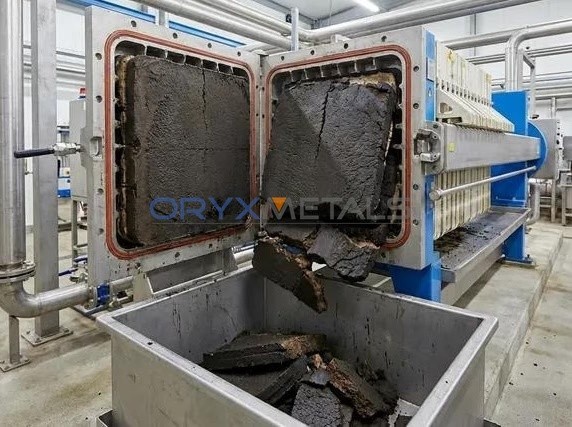
Filter Cake
Filter cake is generated when solids are separated from industrial liquids during filtration.
Depending on the manufacturing process, these cakes can contain meaningful concentrations of recoverable metals.
Common sources include:
Metal finishing
Electroplating
Chemical manufacturing
Hydrometallurgical processing
Mining
Metal refining
Electronics manufacturing
Catalyst production
Wastewater treatment
Filter cakes may contain copper, nickel, cobalt, tin, zinc, molybdenum, tungsten, vanadium, indium or other valuable metals.
Moisture is an important consideration.
Because filter cake can contain significant water, commercial evaluation is frequently based on dry weight and dry-basis metal content rather than gross wet weight.
Plating Sludge and Wastewater Treatment Sludge
Electroplating and surface-finishing operations frequently generate metal-bearing wastewater.
When metals are precipitated during wastewater treatment, they can become concentrated into a sludge or filter cake.
Depending on the plating operation, these residues may contain:
Nickel
Copper
Tin
Zinc
Cobalt
Chromium
Precious metals
Other specialty metals
These materials can be particularly complicated because several metals may be present simultaneously.
For example, a manufacturer may generate a sludge containing nickel, copper and tin rather than a clean nickel-bearing material.
This does not necessarily eliminate its recycling potential.
The correct question is whether the combined recoverable value of the contained metals supports the necessary treatment, refining, transportation and environmental costs.
Metal Concentrates
Oryx Metals also evaluates mineral and secondary concentrates containing base, minor and critical metals.
These can include conventional mineral concentrates as well as secondary concentrates generated from recycling and industrial processing.
Of particular interest are concentrates containing:
Copper
Nickel
Cobalt
Tin
Zinc
Lead
Molybdenum
Tungsten
Vanadium
Tantalum
Niobium
Germanium
Indium
Gallium
We are also interested in polymetallic concentrates where multiple payable metals are present.
Slags, Ashes, Drosses and Furnace Residues
Smelting, melting, casting and thermal processing can produce slags, ashes, drosses and furnace residues containing residual metallic value.
These materials can sometimes contain metals trapped mechanically within the residue or chemically bound in oxides and other compounds.
Depending on the process, potentially recoverable metals can include copper, nickel, cobalt, tin, zinc, lead, tungsten, molybdenum, vanadium and other metals.
Every stream requires individual evaluation because chemistry and metal recovery can vary significantly.
Mixed and Polymetallic Materials
One of the areas of greatest interest to Oryx Metals is mixed-metal material.
Many recycling companies prefer simple materials containing one dominant metal.
Industrial reality is often much more complicated.
We evaluate materials containing combinations such as:
Copper – Lead – Zinc
Copper – Nickel – Tin
Nickel – Cobalt
Nickel – Molybdenum
Nickel – Vanadium
Molybdenum – Tungsten
Molybdenum – Vanadium
Tungsten – Vanadium
Molybdenum – Tungsten – Vanadium
as well as other combinations of base, minor and critical metals.
A material containing several metals should not automatically be treated as low-value waste.
In many cases, the challenge is simply matching the material with a refinery or metallurgical process capable of recovering the appropriate combination of metals.
High-Impurity Materials
Impurities are one of the primary reasons valuable metal-bearing material becomes difficult to sell.
A conventional refinery may be interested in the principal metal but unable to accept the accompanying elements.
Common problematic elements can include:
Lead (Pb)
Arsenic (As)
Cadmium (Cd)
Mercury (Hg)
Fluorine (F)
Chlorine (Cl)
Chromium (Cr)
Magnesium (Mg)
Aluminum (Al)
Sulfur (S)
Silicon (Si)
Phosphorus (P)
Carbon (C)
The presence of these elements does not automatically mean a material cannot be recycled.
Acceptance depends on concentration, mineralogy or chemical form, applicable regulations, the target refinery and the metallurgical process being used.
This is why Oryx Metals prefers to review a complete chemical analysis rather than simply the percentage of the principal metal.
Why Are These Materials Difficult to Recycle?
Complex industrial residues create several challenges that do not exist with clean metal scrap.
Multiple Valuable Metals
A residue may contain several commercially important metals.
The processing route must therefore recover enough of those metals to make the material economically viable.
A refinery designed around copper, for example, may provide little or no payable value for tungsten or molybdenum contained in the same material.
A different processing route may value all three.
Problematic Impurities
Arsenic, mercury, cadmium, chlorine, fluorine, lead and other elements can create environmental, metallurgical or operational problems.
Refineries consequently impose limits or penalties on certain elements.
Moisture
Sludge and filter cake can contain substantial water.
A 20-ton shipment of wet sludge may contain considerably less than 20 tons of actual dry material.
Moisture determination is therefore an important component of sampling and settlement.
Variable Composition
Industrial residues are not always homogeneous.
Material from the top of a container may have a different composition from material at the bottom.
Representative sampling becomes essential.
Fine Particle Size
Dusts and powders require appropriate packaging and handling to prevent material loss and ensure safe transportation.
International Transportation
Cross-border movement of industrial residues can involve additional documentation and regulatory requirements depending on the material, origin and destination.
For this reason, each opportunity must be evaluated individually before shipment.
How Oryx Metals Evaluates Complex Materials
Our objective is straightforward:
Understand what is in the material, determine where it can be processed, and establish its recoverable commercial value.
The evaluation normally begins with several pieces of information.
1. Chemical Analysis
A recent analysis is the best starting point.
We prefer a broad elemental analysis rather than results for only the primary metal.
For example, instead of simply reporting:
Mo: 25%
a more useful analysis might include:
Mo, W, V, Ni, Co, Cu, Fe, Al, Si, Pb, As, Cd, Hg, Cr, S, F and Cl.
The exact analytical requirements depend on the material.
2. Moisture
For sludge, filter cake and other wet material, we need an approximate moisture percentage.
Final settlement may be based on dry metric tons.
3. Quantity
Please provide both:
Quantity currently available
Expected ongoing generation
Oryx Metals evaluates both one-time stockpiles and recurring industrial production.
Recurring streams can be particularly attractive because a dedicated recycling program can be established.
4. Material Origin
Understanding the industrial process that generated the material can be extremely useful.
For example:
Electroplating sludge
Furnace baghouse dust
Hydroprocessing catalyst
Mining concentrate
PVD coating residue
Metal finishing filter cake
Chemical production residue
The production process often provides important information about the likely chemical form of the metals and impurities.
5. Physical Form
We need to understand whether the material is:
Dry powder
Wet sludge
Filter cake
Dust
Granules
Lumps
Briquettes
Solids
Slag
Concentrate
Other
6. Location
Material location affects transportation, regulatory requirements and available processing routes.
Oryx Metals works with suppliers internationally and evaluates materials from North America, South America, Europe, the Middle East and Asia.
Sampling and Analysis
Accurate sampling is particularly important for complex residues.
A single grab sample may not accurately represent an entire shipment.
For larger or heterogeneous lots, representative sampling should incorporate material from multiple locations within the lot.
Depending on the transaction, independent inspection companies and laboratories can be used for:
Weight determination
Sampling
Moisture determination
Sample preparation
Chemical analysis
For larger transactions, buyer and seller can also agree in advance on procedures for resolving analytical differences.
This creates a transparent commercial structure for both parties.
How Complex Metal Residues Are Valued
Unlike clean commodity metal, complex residues generally do not have a simple published price per kilogram.
Their value depends on several variables.
A typical commercial evaluation considers:
Contained metal value
minus
processing and treatment costs
minus
refining charges
minus
impurity penalties
minus
metal recovery losses
minus
transportation and handling costs
The resulting economics determine the value of the material.
This is why two residues containing exactly the same percentage of one metal can have very different commercial values.
For example, a 20% molybdenum residue with relatively benign impurities may be considerably easier to process than another 20% molybdenum residue containing high arsenic, lead, chlorine and fluorine.
The headline metal percentage tells only part of the story.
Payable Metals
Where commercially recoverable, value may be assigned to multiple metals rather than only the dominant element.
Depending on the material and processing route, these may include:
Base Metals
Copper (Cu)
Nickel (Ni)
Tin (Sn)
Zinc (Zn)
Lead (Pb)
Critical and Minor Metals
Molybdenum (Mo)
Tungsten (W)
Vanadium (V)
Cobalt (Co)
Tantalum (Ta)
Niobium (Nb)
Germanium (Ge)
Gallium (Ga)
Indium (In)
Precious Metals
Certain materials may additionally contain:
Gold (Au)
Silver (Ag)
Platinum (Pt)
Palladium (Pd)
Rhodium (Rh)
Whether an individual metal is payable depends on concentration, recovery and the selected processing route.
Recycling Instead of Disposal
One of the most important advantages of identifying a legitimate recycling route is the possibility of converting an industrial liability into a secondary raw material.
Metal-bearing industrial residues can sometimes carry significant disposal and environmental-management costs.
Where technically, economically and legally appropriate, reclamation allows valuable metals to return to productive use rather than being permanently discarded.
The U.S. Environmental Protection Agency, for example, distinguishes reclamation as processing a material to recover a usable product. Regulatory classification and requirements vary by material and jurisdiction, so each stream must be reviewed individually.
For manufacturers, the benefits of successful recovery can include:
Reduced disposal requirements
Recovery of economic value
Reduced consumption of primary resources
More efficient use of existing materials
Improved circularity within the metal supply chain
From Industrial By-Product to Secondary Raw Material
The global metal industry increasingly depends on secondary raw materials.
Mining alone cannot efficiently satisfy every requirement for copper, nickel, cobalt, tungsten, molybdenum, tantalum and other strategically important metals.
At the same time, industrial processes continuously generate residues containing these same elements.
The opportunity is to connect those two sides of the market.
A filter cake containing nickel and copper is not simply a filter cake.
A spent catalyst containing molybdenum, nickel and vanadium is not simply spent catalyst.
A baghouse dust containing zinc, lead and copper is not necessarily waste without value.
They are potential secondary sources of metals.
The challenge is identifying the correct metallurgical pathway.
Why Work With Oryx Metals?
Oryx Metals specializes in markets where material does not always fit neatly into a conventional scrap specification.
Our business is built around understanding unusual metal-bearing materials, identifying appropriate processing outlets and connecting industrial suppliers with global recycling and refining capacity.
We are particularly interested in opportunities where:
Multiple valuable metals are present
Conventional scrap dealers cannot properly value the material
The material contains difficult impurities
Specialized processing is required
The material is generated on a recurring basis
The supplier requires an international recycling solution
A refinery has rejected the material because it falls outside its normal specification
Rather than looking only at the obvious metal, we evaluate the complete composition and potential recovery route.
Industries We Work With
Complex metal-bearing residues arise across numerous industries, including:
Mining and mineral processing
Metal refining
Electroplating
Surface finishing
Aerospace manufacturing
Electronics manufacturing
Semiconductor production
Chemical manufacturing
Petroleum refining
Catalyst manufacturing
Tool manufacturing
Specialty alloy production
Foundries and smelters
Wastewater treatment
Industrial recycling
We work with manufacturers, recyclers, mines, processors, traders and other industrial material generators.
Do You Have a Difficult Metal-Bearing Material?
If you have been told that your material is too contaminated, too complex, too mixed or outside a refinery's normal specification, Oryx Metals would like to evaluate it.
We are interested in both regular production and one-time stockpiles of:
Spent catalysts · Baghouse dust · EAF dust · Filter cake · Plating sludge · Wastewater sludge · Slimes · Ashes · Concentrates · Residues · By-products · Secondaries · Dross · Matte · Slag · Scale · Tailings · Grindings · Powders · Mixed-metal materials
Materials containing Cu, Ni, Co, Mo, W, V, Sn, Zn, Pb, Ta, Nb, Ge, Ga, In and other valuable metals are of particular interest.
High impurity levels do not necessarily disqualify a material.
Submit Your Material for Evaluation
To allow our team to evaluate your material efficiently, please send:
Material description
Chemical analysis or assay
Moisture content, if applicable
Available quantity
Estimated recurring quantity
Material location
Photographs
Safety Data Sheet (SDS), if available
Information about the industrial process that generates the material
If no complete analysis is currently available, send us whatever information you have. In many cases, we can determine the appropriate next steps from photographs, process information and a preliminary assay.
Oryx Metals evaluates complex metal-bearing residues and secondary raw materials worldwide.
If your material contains valuable metals but has been difficult to place because of its composition, impurities or physical form, contact us to discuss a potential recycling solution.
Email: sales@oryx-metals.com
Website: oryx-metals.com
We Purchase a Wide Range of Materials

Recycling More than 12 metals!