Jeremy Tew
Germanium Scrap Recycling: A Guide to Germanium-Bearing Materials
Germanium is a specialized technology metal used in some of the world's most demanding optical, electronic and semiconductor applications.
Although germanium is used in relatively small quantities compared with common industrial metals, its value and specialized applications make germanium scrap an important secondary source of supply.
Oryx Metals purchases and recycles germanium scrap and germanium-bearing materials worldwide, including germanium lenses, infrared optics, wafers, sputtering targets, fiber-optic production materials, semiconductor scrap, powders, residues and other Ge-containing industrial materials.
Some germanium scrap is relatively straightforward to value. Other materials can be considerably more complex, particularly when germanium is contained within glass, coatings, powders, sludges or mixed production residues.
In those cases, identifying the actual germanium content is the key to determining value.
What Is Germanium?
Germanium (Ge) is a brittle, gray-white metalloid with atomic number 32.
It has several properties that make it useful in advanced industrial and technology applications, including:
Semiconductor properties
High refractive index
Transmission of infrared radiation
Compatibility with specialty optical glasses
Useful electrical characteristics
Ability to form high-purity compounds
Performance in specialized photovoltaic applications
Germanium is chemically similar in some respects to silicon, but its optical and electronic properties make it particularly valuable in applications where ordinary glass or silicon is not suitable.
Because germanium is rarely mined as a primary metal, secondary recovery and recycling can play an important role in returning germanium already present in industrial materials back into the supply chain.
What Is Germanium Used For?
Germanium is used across a range of highly specialized industries.
Infrared Optics and Germanium Lenses
One of the most important applications for germanium is infrared optics.
Germanium transmits infrared wavelengths that ordinary glass does not, making it particularly useful for thermal imaging and infrared systems.
Applications can include:
Thermal imaging cameras
Infrared lenses
Night-vision systems
Surveillance systems
Industrial thermal imaging
Fire and rescue imaging equipment
Scientific instrumentation
Defense and aerospace optical systems
Germanium optics are often manufactured as:
Lenses
Windows
Discs
Blanks
Domes
Optical components
Because these items can contain a high percentage of germanium, obsolete or damaged optics can have substantial recycling value.
Oryx Metals actively purchases scrap germanium lenses and infrared optical components.
Fiber Optics
Germanium compounds are also used in the fiber-optic industry.
Germanium dioxide can be used to modify the refractive characteristics of silica glass, making it important in the production of certain optical fibers.
Manufacturing processes may generate:
Germanium-bearing glass
Fiber preform scrap
Production residues
Off-spec material
Powders
Process waste
These materials can vary substantially in germanium content and generally require analysis before pricing.
Semiconductor Applications
Germanium has long been used in semiconductor technology and continues to have specialized applications in advanced electronics.
Germanium-bearing semiconductor materials can include:
Wafers
Ingots
Broken wafers
Off-spec semiconductor material
Production scrap
Sputtering materials
High-purity solids
Purity can have a significant effect on the value and recycling route.
Solar and Photovoltaic Applications
Germanium is also used in certain high-efficiency photovoltaic systems.
Germanium substrates can be used in multi-junction solar cells, particularly where performance is more important than material cost.
Applications can include:
Spacecraft
Satellites
Specialized aerospace systems
High-performance photovoltaic systems
Manufacturing rejects, broken wafers and obsolete substrates may therefore represent another source of recyclable germanium.
Specialty Glass and Optical Materials
Germanium oxide can be used in specialty glass formulations where particular optical properties are required.
These materials can include germanium in concentrations ranging from relatively low levels to much higher-grade specialty materials.
Unlike clean germanium metal, these materials must generally be valued according to contained germanium rather than gross weight.
Germanium Scrap Materials Oryx Metals Purchases
Oryx Metals evaluates a wide range of germanium-bearing materials.
Germanium Lenses and Infrared Optics
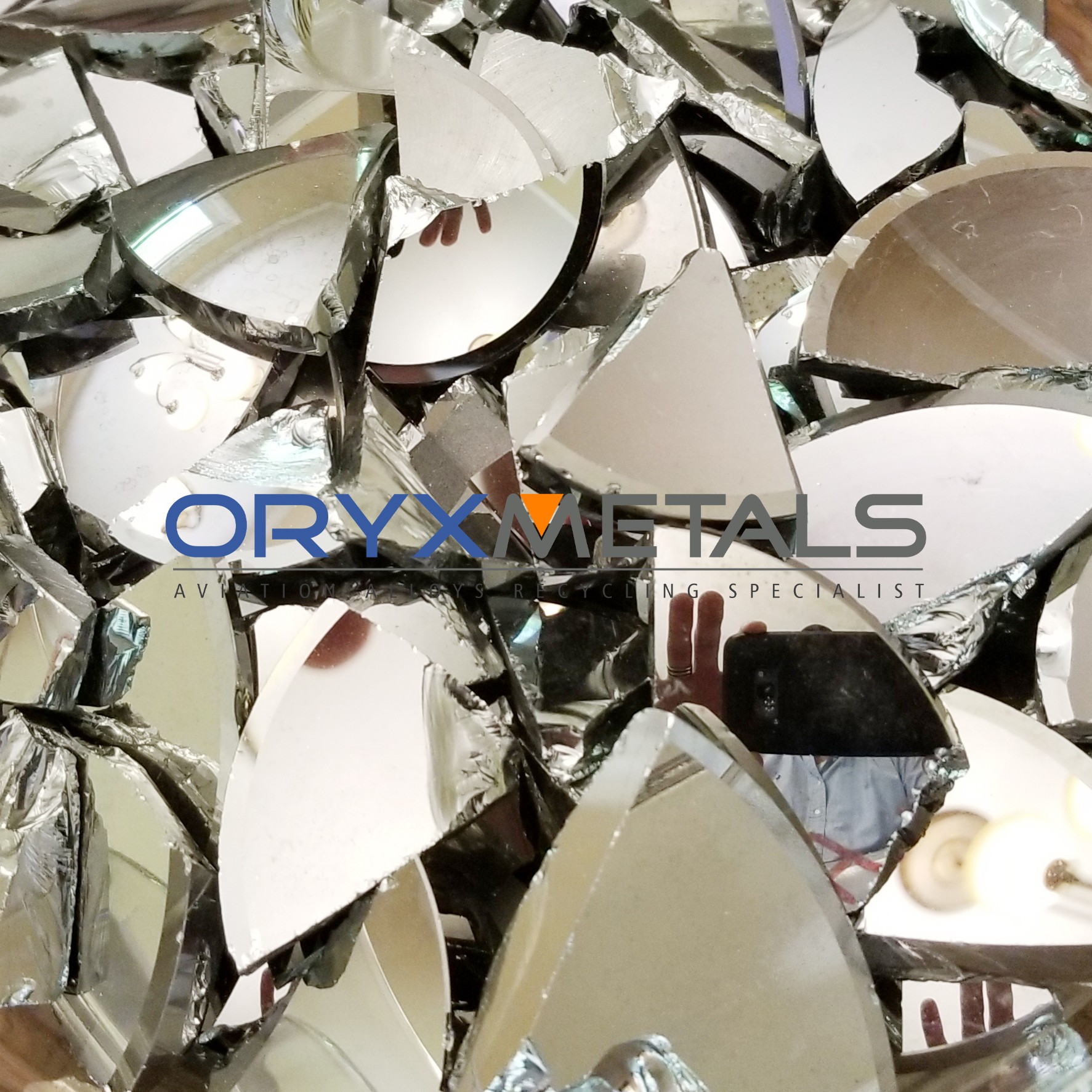
Germanium lenses are among the most recognizable forms of high-value germanium scrap.
We purchase:
Infrared lenses
Thermal imaging lenses
Germanium windows
Optical discs
Optical blanks
Broken lenses
Rejected optics
Obsolete optical components
Damaged germanium optics
Surplus germanium optical inventory
Lenses may be coated or uncoated.
Optical coatings generally represent only a small portion of the overall component, but coatings and attached hardware should still be identified during evaluation.
When the material is predominantly germanium, pricing can often be established quickly.
Germanium Solids
We purchase germanium in solid forms including:
Ingots
Bars
Pieces
Chunks
Discs
Wafers
Targets
Offcuts
Production scrap
High-purity remnants
For clean material with known purity, valuation is generally more straightforward than for mixed residues.
Germanium Wafers and Semiconductor Scrap
Germanium wafers can originate from semiconductor, optical or photovoltaic manufacturing.
We evaluate:
Whole wafers
Broken wafers
Off-spec wafers
Substrate scrap
Manufacturing rejects
High-purity germanium pieces
Depending on the application, wafers may contain coatings, metallization or other materials that need to be considered during recycling.
Germanium Sputtering Targets
Germanium can also be used in thin-film deposition and sputtering applications.
Recyclable material can include:
Used sputtering targets
Target remnants
Target pieces
Bonded targets
PVD production scrap
Thin-film process residues
Where a target is bonded to a backing plate, the backing material and bonding layer need to be considered separately from the germanium value.
Germanium Powders
Germanium-bearing powders can range from relatively high-purity material to complex production residues.
Examples include:
Germanium metal powder
Germanium oxide powder
Off-spec powder
Production fines
Dust
Screenings
Process residues
Powders generally require more detailed analysis because oxygen content, moisture and contamination can significantly affect the recoverable germanium value.
Germanium-Bearing Glass
Certain optical and fiber-optic materials contain germanium within glass rather than as metallic germanium.
Examples can include:
Fiber-optic preform scrap
Specialty optical glass
Germanium-doped glass
Manufacturing rejects
Glass production residues
These materials cannot be valued simply by gross weight.
The actual germanium concentration must first be established.
Germanium Sludge and Process Residues
Industrial production can also generate germanium in less obvious forms.
Oryx Metals evaluates materials such as:
Sludge
Filter cake
Grinding residues
Polishing residues
Powders
Process fines
Mixed-metal residues
Semiconductor production residues
Optical manufacturing waste
These materials may contain significantly less germanium than clean solids or optics but can still have substantial value when sufficient quantities are available.
Why Germanium Scrap Can Be Difficult to Value
There is no single market price that applies to all germanium scrap.
A kilogram of clean high-purity germanium metal is very different from a kilogram of specialty glass containing a few percent germanium.
Likewise, a batch of solid infrared lenses may have very different recycling economics from wet polishing sludge generated while manufacturing those lenses.
Several factors need to be considered.
Germanium Content
The most important factor is generally the amount of recoverable germanium contained in the material.
For clean metal and solid germanium lenses, the Ge percentage may be relatively high.
For glass, powders, residues and sludges, laboratory analysis may be required.
Purity
Germanium is used in applications that can require very high-purity material.
Depending on the scrap type, purity can therefore influence the potential processing route and market value.
However, high-purity feedstock does not automatically mean that scrap will retain its original product value. The form, contamination and cost of returning it to usable germanium all matter.
Moisture
Moisture can materially affect the settlement of germanium-bearing residues.
For example, 1,000 kg of sludge containing 25% moisture contains only approximately 750 kg of dry material before germanium content is considered.
Materials such as sludge, filter cake and wet process residues are therefore commonly evaluated on a dry-weight basis.
Coatings and Attached Materials
Germanium optical and semiconductor components may include:
Optical coatings
Metal coatings
Backing plates
Adhesives
Holders
Ceramic components
Other substrates
These components can affect gross weight and processing costs and need to be identified before valuation.
Other Elements
Germanium-bearing materials can also contain:
Silicon
Gallium
Indium
Arsenic
Aluminum
Zinc
Iron
Tin
Copper
Other process-related elements
Some may have additional value.
Others can complicate refining.
Sampling and Analysis of Germanium-Bearing Materials
When germanium content is unknown, Oryx Metals may request a representative sample before making a final purchase offer.
Depending on the material, laboratory analysis may determine:
Ge %
Moisture
Si
Ga
In
As
Zn
Al
Fe
Other relevant constituents
The correct testing method depends on the material.
A clean solid germanium component may require only confirmation of composition.
A germanium-bearing sludge, powder or glass residue may require much more extensive sample preparation and analysis.
For larger transactions, independent sampling and inspection can also be arranged where appropriate.
How Germanium Scrap Is Valued
For many germanium-bearing materials, the starting point is the amount of germanium actually contained in the lot.
A simplified calculation is:
Dry weight × germanium content × applicable germanium value
Adjustments may then be required for:
Recovery rate
Refining costs
Treatment charges
Impurities
Material form
Moisture
Sampling and analysis
Packaging
Freight
Handling
For example, a clean germanium lens may be valued very differently from germanium-bearing fiber-optic glass containing a much lower Ge percentage.
This is why Oryx Metals evaluates each material according to its actual chemistry and physical form rather than applying one generic "germanium scrap price."
Germanium Lenses: A Particularly Valuable Scrap Stream
Germanium lenses deserve particular attention because they can represent one of the higher-value germanium recycling streams.
Infrared lenses are often manufactured from a relatively substantial piece of germanium and can retain significant metal value even when they are:
Scratched
Chipped
Broken
Outdated
Rejected during manufacturing
Removed from obsolete equipment
No longer suitable for optical use
From a recycling perspective, the lens does not need to remain optically functional.
The important consideration is the amount and quality of germanium contained in the component.
This means that damaged infrared optics that appear commercially unusable may still represent valuable recyclable material.
Germanium Manufacturing Scrap
Some of the most attractive recycling opportunities come directly from manufacturing.
Companies producing optics, semiconductors, fibers and high-purity germanium components may generate recurring materials such as:
Sawing scrap
Grinding residues
Polishing sludge
Broken components
Edge trim
Off-spec wafers
Rejected lenses
Powder
Process residues
Individual pieces may appear insignificant, but regular production can result in a substantial annual quantity of recoverable germanium.
Establishing an ongoing recycling program can allow manufacturers to recover value from these materials instead of treating them simply as production waste.
Why Recycle Germanium?
Germanium is typically recovered as a by-product of other mining and metallurgical operations rather than from dedicated germanium mines.
That makes secondary recovery particularly relevant.
Recycling germanium can:
Return existing material to the supply chain
Reduce unnecessary loss of a valuable technology metal
Recover value from obsolete equipment
Recover value from manufacturing residues
Reduce disposal of metal-bearing production waste
Provide an additional source of industrial germanium feedstock
For companies generating germanium scrap, recycling can also convert what may appear to be an obsolete component or process residue into a valuable commercial material.
Industries Generating Germanium Scrap
Oryx Metals works with germanium-bearing materials generated by industries including:
Infrared optics manufacturing
Thermal imaging
Defense and aerospace
Semiconductor manufacturing
Fiber optics
Telecommunications
Photovoltaics
Specialty glass manufacturing
Thin-film coating
Research laboratories
Industrial recycling
Electronics manufacturing
We evaluate both one-time inventories and recurring production streams.
Global Germanium Scrap Purchasing and Logistics
Oryx Metals purchases germanium scrap internationally.
Depending on the transaction, we can coordinate:
Material evaluation
Sampling
Laboratory analysis
Independent inspection
Packaging
Collection
Domestic transportation
International freight
Export logistics
We work with both relatively small high-value lots and larger industrial quantities.
Selling Germanium Scrap to Oryx Metals
If you have germanium scrap or a material that may contain germanium, send us as much information as possible.
Useful information includes:
Material description
Quantity
Germanium percentage, if known
Purity, if known
Complete assay, if available
Physical form
Moisture content
Material location
Photographs
Packaging
SDS, if applicable
Process that generated the material
Whether the material is a one-time lot or recurring stream
For germanium lenses and solid germanium components, photographs, dimensions, weights and any known specifications can often allow us to evaluate the material quickly.
For unknown residues, powders, glass or sludge, representative sampling and analysis may be required.
Germanium Scrap Recycling with Oryx Metals
Oryx Metals purchases and recycles germanium scrap and germanium-bearing secondary materials worldwide.
We are interested in materials including:
Germanium lenses
Infrared optics
Germanium metal
Germanium wafers
Germanium sputtering targets
Semiconductor scrap
Germanium powders
Germanium oxide
Fiber-optic production scrap
Germanium-bearing glass
Grinding and polishing residues
Sludge and filter cake
Other germanium-containing industrial materials
Our focus extends beyond standard scrap grades.
We also evaluate unusual or difficult germanium-bearing materials where the value may not be immediately obvious.
If you have germanium scrap available, contact our commercial team with the quantity, location, photographs and analysis, if available.
Purchasing: Click Here To Contact Us
Email: sales@oryx-metals.com
Website: oryx-metals.com
We Purchase a Wide Range of Materials

Recycling More than 12 metals!